

Blog

Sign up to our newsletter

AI amplifies the operating model you already have. If it’s messy, well...
AI amplifies the operating model you already have. Speeding up individual tasks gets you more output, not more value. Here are seven ways we help clients redesign how work flows so that AI shows up in EBIT, not just local productivity.

When Execution Outruns Strategy
AI is making execution faster than strategy can steer it. For the organisations furthest ahead, the old strategy → plan → execute → feedback loop isn't just under strain, it's lost its strategic intent.
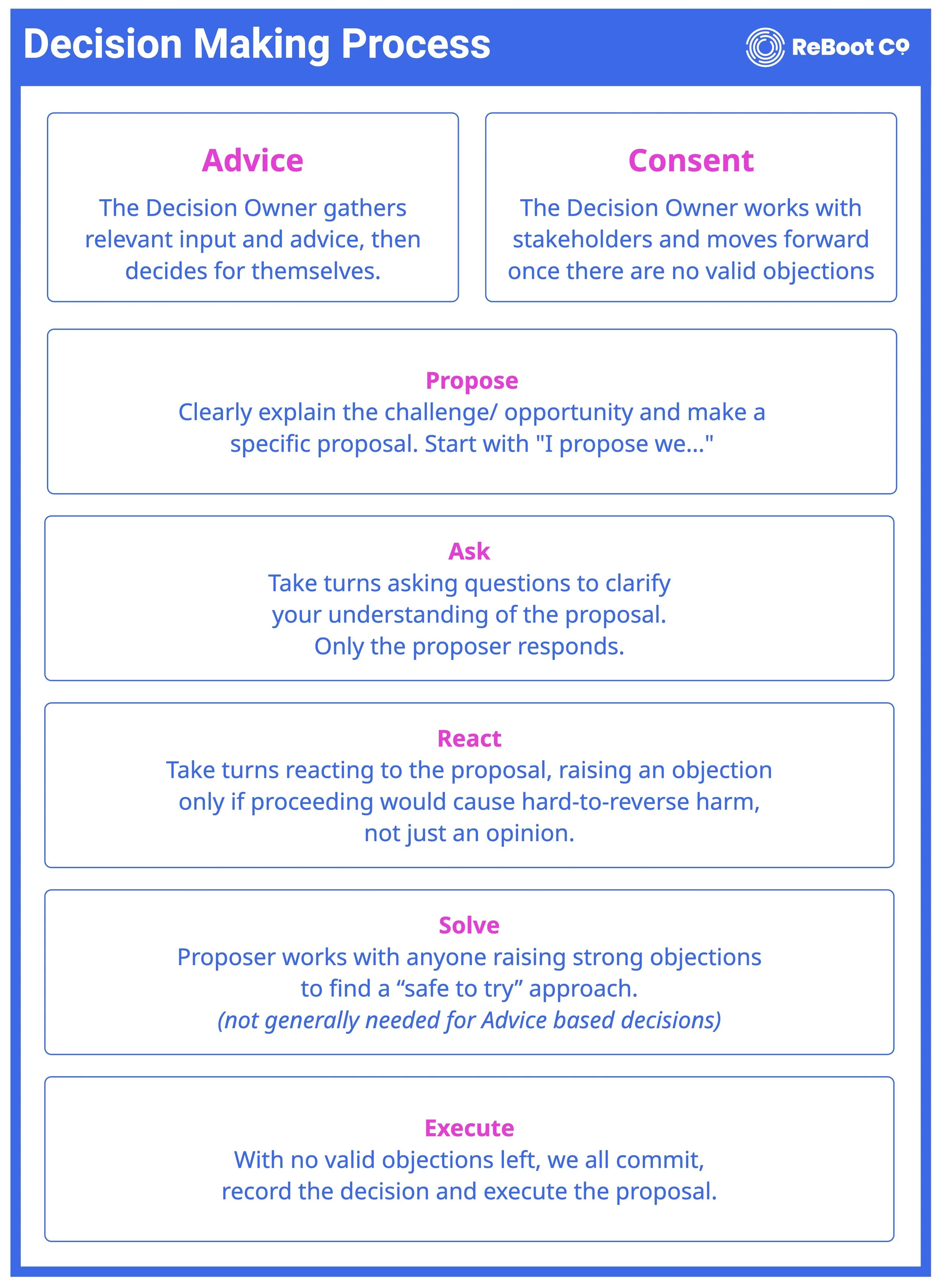
Making Advice and Consent based decisions - a practical guide
How do you actually start making the shift from Consensus to Consent? In the final part of this series, we cover Jeff Bezos's Type 1 vs Type 2 decisions, define the Decision Owner role, and share a practical guide to help you make better, faster decisions.

Making better tough decisions - from Consensus to Consent
Most organisations default to consensus for tough decisions. It feels inclusive and safe, but in practice it's slow, it waters down good ideas, and normally less inclusive than it looks.
Consent flips the default. Instead of everyone agreeing before you move, you move unless someone has a valid reason not to. That one shift changes the speed, quality, and shape of decisions across your organisation.
Part 4 of my short series on making better decisions, faster.

Advice - Decisions designed for Speed
Most decisions are made by a small number of people, whoever has the authority. But the people with the most relevant knowledge are rarely the ones making the call, and that results in the quality of the outcome.
The Advice process is a simple, structured way to fix that. Anyone, at any level, can use it, and it doesn't require a meeting.
Part 3 of my short series on making better decisions, faster.
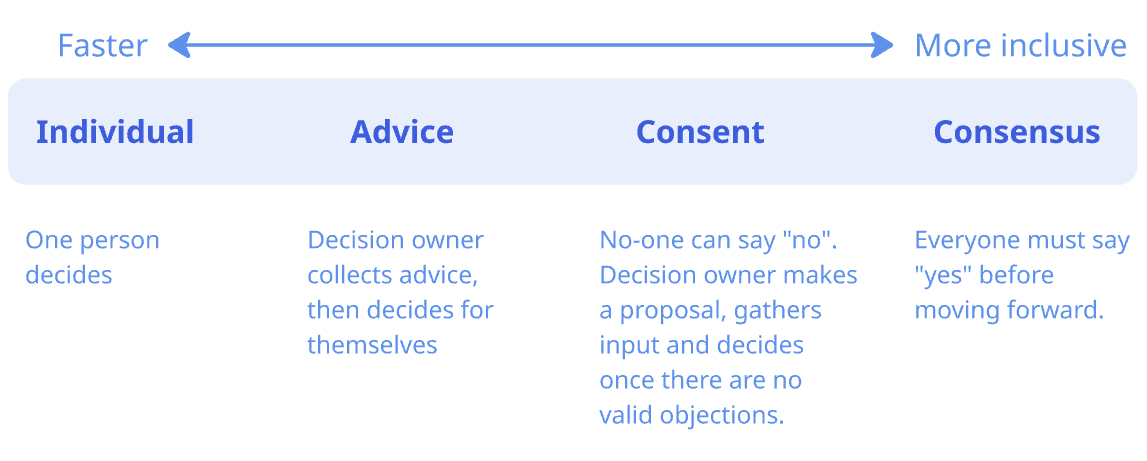
The decision making spectrum. Why the extremes fail
Most organisations never consciously choose how they make decisions. They default to organisational norms that tend to be these two extremes: one person decides alone, or everyone has to agree before anything moves. Both cause dysfunction. Here's a map of the four predominant ways decisions actually get made, and why the extremes fail.

Your decision making approach costs more than you think
In most organisations, when something isn't moving fast enough, managers look at the work the plans, the tools, the team. They rarely look at how decisions are made. But decisions are behind everything, and if your decision making approach is broken, everything downstream pays the price. Here's why it's costing more than you think.

If You're Not Doing a Value Stream Re-org, What Are You Actually Doing?
Most technology transformations start in the right place. Leaders read the books, attend the conferences, talk about empowered teams and fast flow. And then they get to the hard part and stop just shy of the thing that actually changes outcomes.
They improve ways of working, introduce agile rituals, maybe adopt a framework or two. But they don't touch the structure.
And the structure is everything.

The 94% Gap from Strategy to Execution
“94% of C-suite executives believe their operating models are jeopardizing their growth and performance.”
Nearly every leader knows the "engine" of their business is failing, yet very few feel they have the air cover to stop and fix it. We’re all caught in the "Urgency Trap" - firefighting the day-to-day so intensely that we never get around to modernising the "how."